
Read this before starting a juice cleanse
Juice cleanses have become synonymous with the idea of a health reset. A few days of green juice promises to "flush out toxins", give your digestive system a break, reduce bloating, improve your skin, boost your energy and perhaps help you lose a few pounds along the way.
It sounds appealing, particularly after a holiday, Christmas, or simply when you feel sluggish and want to start looking after yourself again.
But does your body actually need cleansing? The short answer is no.
Our bodies have sophisticated systems working around the clock to process and eliminate substances they doesn't need. There is currently very little good-quality evidence that commercial detox diets enhance this process in otherwise healthy people.
And while fruit and vegetable juices can absolutely form part of a healthy diet, replacing your meals with juice is a very different proposition. So let’s dive into separating the science from the marketing.
Key Takeaways:
What is a juice cleanse? A short-term diet where most or all solid food is replaced with fruit and vegetable juices, often for one to several days.
Do juice cleanses detox the body? There is currently no convincing evidence that juice cleanses remove toxins from the body more effectively than your body's own detoxification and elimination systems.
Can you lose weight? Yes, but largely because you are dramatically reducing your calorie intake. Some of the initial change on the scales may also reflect water and glycogen rather than body fat.
What's missing? Juice is generally low in protein, fat and fibre - all important components of a balanced diet.
Possible side effects: Hunger, headaches, fatigue, irritability, dizziness, digestive changes and fluctuations in energy.
The key takeaway: Juice isn't inherently bad. But you don't need to live on juice to "cleanse" your body. For most people, supporting health means adding nourishing foods rather than temporarily removing most of them.
Contents
What is a juice cleanse?
Do juice cleanses actually detox your body?
How does your body naturally detox?
Are there any benefits to juicing?
Juice vs whole fruit and vegetables
Do juice cleanses help you lose weight?
What happens to your blood sugar on a juice cleanse?
What happens to your gut health?
What nutrients are missing from a juice cleanse?
What are the possible side effects and risks?
What should you do instead of a juice cleanse?
FAQs
Conclusion + Next steps
What is a juice cleanse?
A juice cleanse - sometimes called a juice detox, juice fast or detox diet - typically involves replacing some or all meals with fruit and vegetable juices for a set period. Some last 24 hours. Others run for three, five or seven days.
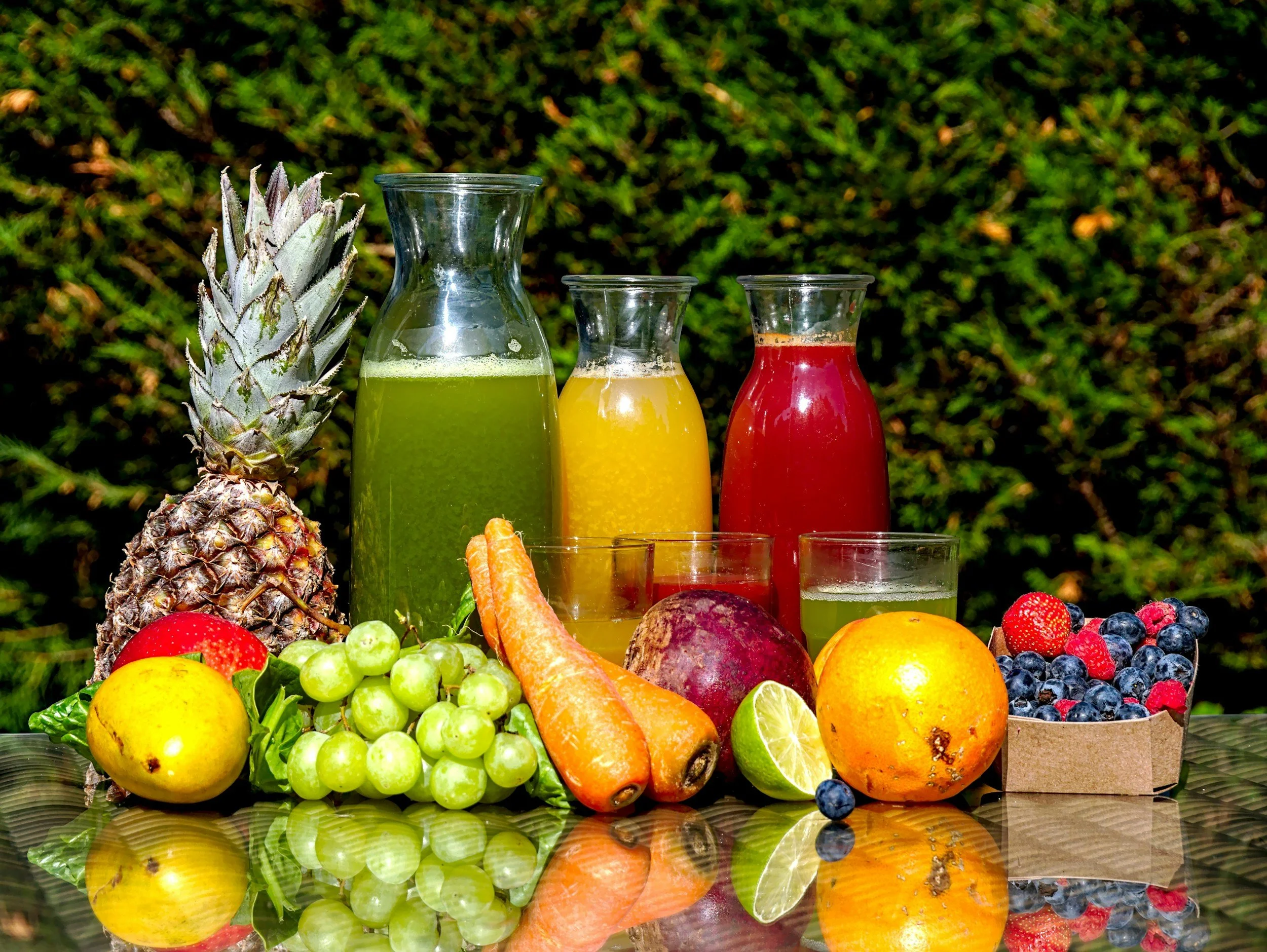
The juices themselves might contain nutritious ingredients such as spinach, cucumber, beetroot, celery, apple, ginger, lemon or berries. That's important because juice isn't the problem. Fruit and vegetables contain valuable vitamins, minerals and plant compounds. A small glass of juice can comfortably fit within a healthy diet.
The issue is the idea that consuming only juice somehow "cleanses" your organs, removes accumulated toxins or resets your metabolism. That's where the science becomes much less convincing.
Do juice cleanses actually detox your body?
This is probably the biggest claim surrounding juice cleanses - and the one I would question most strongly. The word "toxin" is often used very vaguely in wellness marketing.
What toxin are we trying to remove? Where has it accumulated? How are we measuring it? And what evidence shows that drinking juice increases its elimination?
These questions are rarely answered.
A review examining detox diets found very little clinical evidence supporting commercial detox diets for eliminating toxins or supporting sustainable weight loss. The available studies were generally small and methodologically weak.
That doesn't mean nutrition has no influence on our body's detoxification processes. It absolutely does. But that is very different from saying we need a three-day juice cleanse to "flush out" toxins.
How does your body naturally detox?
Detoxification is real. The "detox" isn't.
Our body is constantly processing, transforming and eliminating substances through several interconnected systems":
Liver plays a major role in metabolising alcohol, medications, hormones and many other compounds. It uses a series of enzymatic pathways to transform substances so that they can ultimately be eliminated.
Kidneys continuously filter your blood, helping regulate fluid and electrolyte balance while removing waste products into your urine.
Digestive system helps eliminate waste through bowel movements. Fibre is particularly important here because it supports stool formation, gut motility and a healthy gut microbiome.
Lungs remove carbon dioxide every time you breathe.
Skin also contributes to normal excretory processes, although sweating is not the primary route through which your body "detoxes".
So rather than trying to cleanse these organs, a more useful question is:
How can I consistently give these systems what they need to function normally?
Usually, the answer looks rather less glamorous than an expensive bottle of green juice:
Eat plenty of vegetables and fruit
Include adequate protein
Eat enough fibre
Drink enough fluid
Include healthy fats
Limit excessive alcohol
Don't smoke
Move regularly
Prioritise sleep
Support regular bowel movements
Avoid unnecessarily restrictive diets
It's the foundations that matter.
Are there any benefits to juicing?
Yes - and this is where some of the online conversation becomes unnecessarily black and white.
Juicing fruits and vegetables can provide vitamins, minerals and phytochemicals. For someone who struggles to eat vegetables or fruit, a small juice may also be a convenient way to increase their intake.
Research into 100% fruit juice as part of an otherwise balanced diet has not shown that moderate consumption is inherently harmful. Some studies have even reported potentially favourable effects on certain cardiovascular markers. But evidence about drinking a moderate amount of 100% fruit juice alongside food cannot be extrapolated to prove that living exclusively on juice for several days is beneficial. They are two very different dietary patterns.
In the UK, the NHS recommends limiting the combined total of fruit juice, vegetable juice and smoothies to around 150 ml per day. (This is a lot less than you might think)
Juice vs whole fruit and vegetables: what's the difference?
One of my biggest issues with juice cleanses is that we take incredibly nutritious foods - fruits and vegetables - and remove one of their most valuable components. Fibre.
When you eat an apple, for example, you consume its naturally occurring sugars alongside water, fibre and a complex food matrix. When several apples are juiced, much of that fibre is removed and it becomes very easy to consume the juice of multiple pieces of fruit within a few minutes, as most traditional juicers separate the liquid from the fibrous pulp.
That matters because fibre:
Supports healthy bowel movements
Provides fuel for beneficial gut bacteria
Contributes to satiety
Can help regulate the absorption of carbohydrates
Supports cardiovascular and metabolic health
A smoothie is slightly different because blending usually retains the whole fruit or vegetable, including more of its fibre.
That doesn't automatically make every smoothie nutritionally balanced - but from a fibre perspective, blending the whole food generally has an advantage over extracting the juice.
Do juice cleanses help you lose weight?
You may lose weight on a juice cleanse. But that's not evidence that the cleanse has "detoxed" your body or reset your metabolism.
Most juice cleanses provide considerably fewer calories than someone would normally consume. If you dramatically reduce your energy intake for several days, your body weight is likely to fall.
But short-term changes on the scales don't necessarily represent equivalent losses of body fat.
When carbohydrate and overall food intake fall, your body can use some of its stored glycogen. Glycogen is stored alongside water, so using these stores can cause water weight to fall too. This does not neccessarily result in body fat loss.
There is also simply less food moving through your digestive tract.
Once normal eating resumes, glycogen, water and the contents of your digestive system increase again - so some of the weight may return quite quickly.
More importantly, weight loss isn't just about making the number on the scales as small as possible, as quickly as possible. From a body composition perspective, we ideally want to reduce excess body fat while preserving muscle. That's why adequate protein, resistance training, sleep and a sustainable energy deficit are so important.
A low-protein juice cleanse doesn't provide a good foundation for that.
What happens to your blood sugar on a juice cleanse?
You may have heard that fruit juice causes huge blood sugar spikes. The reality is slightly more nuanced.
Fruit juice contains naturally occurring sugars, and juicing removes much of the fibre found in whole fruit. Because liquid carbohydrates can be consumed quickly and there may be little protein, fat or fibre alongside them, some juice-based meals may be absorbed relatively rapidly.
For some people, this can contribute to fluctuations in blood glucose and energy. You might recognise the pattern:
Quick energy → energy dip → hunger → irritability → another juice
However, it's also important not to demonise fruit juice. Research looking at moderate consumption of 100% fruit juice within normal diets has not consistently shown adverse effects on longer-term markers of glucose control. Again, context matters.
A 150 ml glass of orange juice alongside eggs, wholegrain toast and avocado is nutritionally very different from consuming bottles of juice as your sole source of food all day.
This is why I tend to focus on the composition of the whole meal rather than labelling individual foods as "good" or "bad".
What happens to your gut health during a juice cleanse?
Juice cleanses are sometimes marketed as a way of "resting" or "resetting" the gut. For most healthy people, there is no reason your digestive system needs a holiday from digesting food.
In fact, one of the major things removed during juicing - fibre - is particularly important for gut health. Our gut microbiome contains trillions of microorganisms. Many beneficial bacteria ferment certain types of dietary fibre, producing compounds including short-chain fatty acids that help support the intestinal environment. So if you're trying to support your gut microbiome, routinely removing fibre isn't an obvious place to start.
There are specific clinical circumstances where someone may temporarily need a lower-fibre diet. But that's very different from recommending juice cleanses to the general population.
If bloating, constipation, diarrhoea or digestive discomfort is the reason you're considering a cleanse, I'd be much more interested in why those symptoms are occurring in the first place.
Could there be:
Constipation or altered gut motility?
IBS?
Food intolerances?
Coeliac disease?
SIBO?
Changes in the gut microbiome?
Stress affecting the gut-brain axis?
Inadequate fibre or fluid?
A very restrictive diet?
Another gastrointestinal condition that warrants investigation?
Masking symptoms for a few days by dramatically changing your food intake doesn't necessarily address the underlying driver. This is where joining the dots becomes much more useful than simply removing food.
What nutrients are missing from a juice cleanse?
Fruit and vegetables are incredibly nutritious. But they are not nutritionally complete on their own. Depending on the ingredients used, a juice cleanse may provide useful amounts of vitamin C, folate, potassium and various phytochemicals. But it is typically very low in several things I actively want people to eat enough of.
Protein provides amino acids needed for maintaining muscle, producing enzymes and hormones, supporting immune function and repairing tissues. Juice generally contains very little.
Healthy fats provide essential fatty acids, contribute to satiety and help us absorb the fat-soluble vitamins A, D, E and K. Again, most juices contain almost none.
Fibre Much of the fibre naturally present in fruits and vegetables is discarded during traditional juicing.
Overall energy Some cleanses provide very little energy relative to someone's needs. That may leave you feeling exhausted rather than revitalised - particularly if you're exercising, working long days or already under-fuelling.
The irony is that in an attempt to become "healthier", you can temporarily remove several of the things your body needs to function well.
What are the possible side effects of a juice cleanse?
Not everyone will feel unwell during a short juice cleanse, but common complaints can include:
Hunger
Headaches
Fatigue
Feeling weak
Irritability
Difficulty concentrating
Dizziness or light-headedness
Digestive changes like bloating
Reduced exercise performance
Energy fluctuations
Some of these symptoms are occasionally presented as evidence that "toxins are leaving the body".
There is a much simpler explanation.
If you suddenly stop eating your usual amount of food, significantly reduce calories, consume very little protein or fat, change your caffeine intake and alter your normal carbohydrate intake, you may not feel particularly good.
A headache isn't proof that your cleanse is working.
Are juice cleanses ever dangerous?
For most otherwise healthy adults, a very short period of juicing may be more uncomfortable than dangerous. But that doesn't mean juice cleanses are appropriate for everyone. There are some additional considerations.
Very high intakes of certain oxalate-rich juices have been linked in case reports with oxalate nephropathy and acute kidney injury, particularly in susceptible individuals.
Fresh, unpasteurised juice can also carry a greater risk of bacterial contamination.
And restrictive diets may be particularly problematic for people who have increased nutritional requirements, difficulties regulating blood glucose or a history of disordered eating.
What should you do instead of a juice cleanse?
If you're considering a cleanse because you've been away, eaten more restaurant food than usual, had more alcohol, or simply feel that your routine has slipped, you don't need to compensate.
Just return to the basics.
1. Build balanced meals. Rather than removing food, think about what you can add. At most meals, aim for a combination of: Protein + fibre-rich carbohydrates + vegetables/fruit + healthy fats. For example:
Greek yoghurt, berries, oats, nuts and seeds
Eggs, wholegrain toast, avocado and tomatoes
Chicken, quinoa, roasted vegetables and olive oil
Salmon, potatoes and plenty of colourful vegetables
Lentil curry with brown rice and yoghurt
2. Prioritise plants. Fruit, vegetables, wholegrains, beans, lentils, nuts, seeds, herbs and spices provide fibre and a wide variety of phytochemicals. Rather than squeezing five vegetables into a juice and throwing away much of the fibre, eat them.
3. Get enough protein Include a meaningful protein source at each meal. Protein supports satiety, muscle maintenance, recovery and numerous physiological processes. This may include:
Eggs
Oily and white fish
Chicken, turkey
Greek yoghurt, Cottage cheese
Tofu, Tempeh
Beans, Chickpeas, Lentils
4. Support your gut with fibre Gradually include a diverse range of fibre-containing foods and drink enough fluid. If you have IBS or significant digestive symptoms, however, more fibre isn't automatically better. The type, quantity and timing may need to be personalised.
5. Hydrate Your kidneys need adequate fluid to perform their normal functions. For most people, water does the job perfectly well. It doesn't need charcoal, chlorophyll, lemon or a £9 bottle attached to it.
6. Reduce alcohol If your aim is to support your liver, reducing alcohol intake is considerably more meaningful than drinking a detox juice alongside your normal alcohol intake.
7. Sleep Sleep affects appetite regulation, glucose metabolism, food choices, mood and recovery. It may not have the marketing appeal of a "72-hour cellular reset", but consistently getting enough sleep is one of the foundations of good health.
8. Move your body Walking, strength training and regular exercise support cardiovascular health, metabolic health, mood, digestion and long-term body composition. You don't need to "sweat out toxins". Move because movement is good for you.
FAQs
-
There is currently no convincing evidence that commercial juice cleanses remove toxins more effectively than your body's existing detoxification and elimination systems. Your liver, kidneys, digestive system and lungs are continually processing and removing waste products. Nutrition can support these systems, but you do not need to stop eating solid food for them to work.
-
Your weight may decrease during a three-day juice cleanse because you are consuming fewer calories, less food and potentially fewer carbohydrates than usual. Some of the initial loss may reflect water and glycogen rather than body fat. Once you resume your normal diet, some weight may return. Sustainable fat loss is better supported by a manageable calorie deficit alongside adequate protein and resistance exercise.
-
There isn't good evidence that healthy digestive systems need to be "rested" using juice. Traditional juicing removes much of the fibre found in whole fruits and vegetables, yet fibre is important for bowel health and the gut microbiome. If you're experiencing persistent bloating, constipation, diarrhoea or abdominal discomfort, investigating the underlying cause is likely to be more useful than doing a cleanse.
-
Generally, no. Juice can provide many of the vitamins, minerals and plant compounds found in fruit and vegetables, but traditional juicing removes much of the fibre. Whole fruits and vegetables therefore offer nutritional advantages. If you enjoy juice, it can still form part of a balanced diet rather than needing to replace whole produce entirely.
-
Potentially. Blending usually retains more of the fibre because you're consuming the whole fruit or vegetable rather than separating the juice from the pulp. A smoothie can also be made into a more balanced meal by adding protein and healthy fats - for example Greek yoghurt, kefir, nuts, seeds or nut butter.
-
You might temporarily notice less bloating simply because you're eating less food or removing foods that normally trigger symptoms. But that doesn't tell you why you were bloated. Persistent bloating can have many possible drivers, including constipation, IBS, food intolerances, altered gut motility and other gastrointestinal conditions. Recurrent symptoms deserve investigation rather than repeated restriction.
-
For most people, a small amount of 100% juice can fit within a balanced diet. UK guidance recommends keeping fruit juice, vegetable juice and smoothies to a combined total of around 150 ml per day and having them with a meal. Whole fruit and vegetables should still make up the majority of your fruit and vegetable intake.
-
You don't need to detox after eating differently for a few days. Return to your normal routine: eat balanced meals, include plenty of plants and fibre, prioritise protein, hydrate, reduce alcohol, sleep well and get back to regular movement. Your health is influenced far more by what you do consistently over months and years than by a few days of indulgence.
Conclusion. So, is juice healthy?
It can be. This is an important distinction. Juice and juice cleanses are not the same thing.
A small glass of 100% fruit or vegetable juice can form part of an otherwise balanced diet. Juice can provide micronutrients and plant compounds, and enjoying it occasionally is not something most people need to worry about.
But more is not necessarily better. UK guidance recommends limiting fruit juice, vegetable juice and smoothies to a combined 150 ml per day, partly because the sugars released during juicing are classed as free sugars and can contribute to tooth decay.
Personally, I'd prioritise whole fruits and vegetables most of the time and view juice as an addition to your diet rather than a replacement for food.
About the author
Laura Andreli, Nutritional Therapist
Laura helps clients unlock the powerful connection between the gut and the brain. She specialises in IBS, SIBO, digestive disorders, food sensitivities, and the gut–brain axis - particularly where symptoms such as brain fog, anxiety, low mood, fatigue, and poor concentration may be linked to underlying microbiome imbalance and metabolic stress.
Laura uses evidence-informed nutrition strategies and targeted lifestyle interventions to support digestive function, calm neuroinflammation, and improve energy, mood, and cognitive performance.
Laura’s path into nutritional therapy is personal. While studying at Cambridge, she was diagnosed with Polyendocrine Metabolic Ovarian Syndrome (PMOS; formerly termed PCOS). The experience of receiving a label without clear, actionable guidance shaped her philosophy: translate complex science into practical steps that genuinely help people feel and function better. A former England-level long jumper, she understands first-hand how hormones, metabolism, and nutrition can influence performance, recovery, and cognition.
-
Klein AV, Kiat H. Detox diets for toxin elimination and weight management: a critical review of the evidence. Journal of Human Nutrition and Dietetics. 2015;28(6):675-686. doi:10.1111/jhn.12286.
Useful for: detox claims, toxin elimination and short-term weight loss.Mayo Clinic. Juicing: What are the health benefits? Updated August 2023.
Useful for: juice vs whole fruit and vegetables, fibre loss, juice cleanses and nutritional adequacy.NHS. The Eatwell Guide.
Useful for: UK guidance that fruit juice, vegetable juice and smoothies should be limited to a combined 150 ml per day.Murphy MM, Barrett EC, Bresnahan KA, Barraj LM. 100% fruit juice and measures of glucose control and insulin sensitivity: a systematic review and meta-analysis of randomised controlled trials. Journal of Nutritional Science. 2017;6:e59. doi:10.1017/jns.2017.63.
Useful for: giving a more nuanced discussion of fruit juice and blood glucose rather than implying all juice causes harmful glucose spikes.D'Elia L, Dinu M, Sofi F, Volpe M, Strazzullo P. 100% fruit juice intake and cardiovascular risk: a systematic review and meta-analysis of prospective and randomised controlled studies. European Journal of Nutrition. 2021;60(5):2449-2467. doi:10.1007/s00394-020-02426-7.
Useful for: evidence that moderate 100% fruit juice consumption is not the same thing as a juice cleanse and may have neutral or favourable effects on some cardiovascular markers.Health effects of drinking 100% juice: an umbrella review of systematic reviews with meta-analyses. 2024.
Useful for: the wider evidence base on 100% fruit juice, showing that most evaluated outcomes were neutral, with some beneficial and some adverse associations.Vinelli V, Biscotti P, Martini D, et al. Effects of dietary fibers on short-chain fatty acids and gut microbiota composition in healthy adults: a systematic review. Nutrients. 2022;14(13):2559. doi:10.3390/nu14132559.
Useful for: fibre, the gut microbiome and short-chain fatty acid production.Simpson HL, Campbell BJ. Review article: dietary fibre-microbiota interactions. Alimentary Pharmacology & Therapeutics. 2015.
Useful for: explaining how plant fibre influences gut microbiota composition and microbial metabolites.Mukhopadhya I, Louis P. Gut microbiota-derived short-chain fatty acids and their role in human health and disease. Nature Reviews Microbiology. 2025;23(10):635-651. doi:10.1038/s41579-025-01183-w.
Useful for: a current authoritative reference on fibre fermentation and short-chain fatty acids.Savo Sardaro ML, et al. Effects of vegetable and fruit juicing on gut and oral microbiome composition. Nutrients. 2025.
Useful for: the specific question of juice-only diets and microbiome changes. Importantly, this was a small study of only 14 participants, so I would present it as emerging evidence rather than strong evidence.Getting JE, Gregoire JR, Phul A, Kasten MJ. Oxalate nephropathy due to 'juicing': case report and review. American Journal of Medicine. 2013;126(9):768-772. doi:10.1016/j.amjmed.2013.03.019