
When does a Deficiency Become Anaemia?
You might be feeling more tired than usual, struggling to concentrate, getting out of breath more easily or finding that exercise feels harder than it used to. Perhaps you have also noticed headaches, restless legs, hair loss or a general feeling that you are not quite yourself.
Then you have a blood test, only to be told that everything is "normal".
This can be confusing, particularly when it comes to iron, vitamin B12 and folate. These nutrients are needed to make healthy red blood cells, which carry oxygen around your body. If we don't have enough of them, we can eventually develop anaemia - a condition where your haemoglobin level is too low.
But here is the important part: we can become deficient before you become anaemic.
Our body has ways of keeping your haemoglobin within the normal range for a while, even as your nutrient stores start to run low. This means you may begin to notice changes in your energy, concentration, exercise performance or general wellbeing before a routine blood test shows anaemia.
So when you are feeling exhausted, foggy or unusually depleted, the question isn't always simply:
"Am I anaemic?" It can also be: "Do I have enough of the nutrients my body needs - and if I don't, why?"
Key Takeaways:
What is anaemia? Anaemia means you have a haemoglobin concentration below the expected range. Haemoglobin is the protein in red blood cells that carries oxygen around the body.
What is nutrient deficiency? Iron, vitamin B12 or folate deficiency means your body does not have enough of that nutrient, or cannot use or absorb it effectively. Deficiency can exist before anaemia develops.
Common symptoms: Fatigue, low energy, reduced exercise tolerance, brain fog, poor concentration, headaches, palpitations, breathlessness, restless legs, hair loss and changes to the nails. B12 and folate deficiency can additionally cause neurological symptoms such as pins and needles.
Who is more at risk? Menstruating women, pregnant women, endurance athletes, people following restrictive or vegan diets, older adults, people with gastrointestinal conditions or surgery, people with heavy menstrual bleeding, frequent blood donors and people taking certain medications.
Possible underlying drivers: Inadequate intake, increased requirements, blood loss, impaired absorption, gastrointestinal disease, medication effects and, in some cases, chronic inflammation.
Key takeaway: Anaemia is an important sign of deficiency, but it is not necessarily the starting point. Looking at the wider pattern of symptoms, diet, history and appropriate blood markers can identify problems earlier.
Who may benefit from further investigation? Anyone with persistent unexplained fatigue, reduced exercise performance, cognitive symptoms, restless legs, heavy periods, recurrent deficiency, a restrictive diet, gastrointestinal symptoms or risk factors for impaired absorption.
Contents
What exactly is anaemia?
Can you be deficient without being anaemic?
Iron deficiency: more than just low haemoglobin
Vitamin B12 deficiency: why it is different
Vitamin B9 (Folate) deficiency and anaemia
Why does deficiency happen in the first place?
Who is most at risk?
What blood tests should you ask for?
I’m deficient. What now?
How to prevent deficiency through diet
When should you speak to your GP?
FAQs
Conclusion + Next steps
What exactly is anaemia?
Anaemia simply means that you have less haemoglobin in your blood than your body needs. Haemoglobin is the protein inside red blood cells that carries oxygen from your lungs to the rest of your body.
This is where iron, vitamin B12 and folate (vitamin B9) come in. All three are essential for making healthy red blood cells, but they play different roles in the process. Iron is needed to make haemoglobin itself, while B12 and folate are essential for making and dividing new red blood cells. If you don't have enough of any of these nutrients, your body may eventually struggle to produce healthy red blood cells, leading to anaemia.
The World Health Organization defines anaemia in non-pregnant adults aged 15-65 as a haemoglobin concentration below 120 g/L in women and 130 g/L in men. Pregnancy has different thresholds because blood volume and nutritional requirements change during pregnancy.
But this is where things become more interesting.
Anaemia is often the end point of a deficiency, rather than the beginning. Your body has ways of maintaining haemoglobin levels for a while, even when nutrient stores are starting to fall, developing a deficiency before anaemia. For example, your iron stores may gradually become depleted while your haemoglobin remains within the normal range. You can think of it as a spectrum:
Healthy nutrient status → declining stores → deficiency → impaired red blood cell production → anaemia
The speed and pattern of this progression varies depending on the nutrient, the individual and the underlying cause of the deficiency. This is why looking only at haemoglobin can sometimes miss the bigger picture.
Can you be deficient without being anaemic?
Yes.
Iron deficiency is a particularly good example. Your body has several ways of protecting haemoglobin production when iron availability starts to fall. It will prioritise essential functions and draw on stored iron, particularly from ferritin. This means that your haemoglobin can look perfectly acceptable while your iron stores are becoming depleted. Iron deficiency without anaemia is increasingly recognised as a clinically relevant state. Symptoms can include fatigue, reduced exercise tolerance, difficulty concentrating, restless legs, hair thinning and reduced stamina.
This is why a full blood count alone does not tell you whether you have adequate iron stores.
Iron, B12 and folate deficiencies are important nutritional causes of anaemia, but they are not the only causes. Anaemia can also occur because of blood loss, chronic disease or inflammation, kidney disease, inherited blood disorders and other medical conditions. This is one reason it is important to investigate the cause rather than assuming that anaemia automatically means you need more iron.
Iron deficiency: more than just low haemoglobin
Iron has a much bigger job than simply making haemoglobin. It is involved in:
Oxygen transport
Energy production within mitochondria
DNA synthesis
Neurotransmitter production
Cognitive function
Muscle metabolism
Immune function
When iron availability falls, these processes can potentially be affected before anaemia develops.
What does iron deficiency feel like?
The symptoms can be surprisingly subtle at first. You might notice:
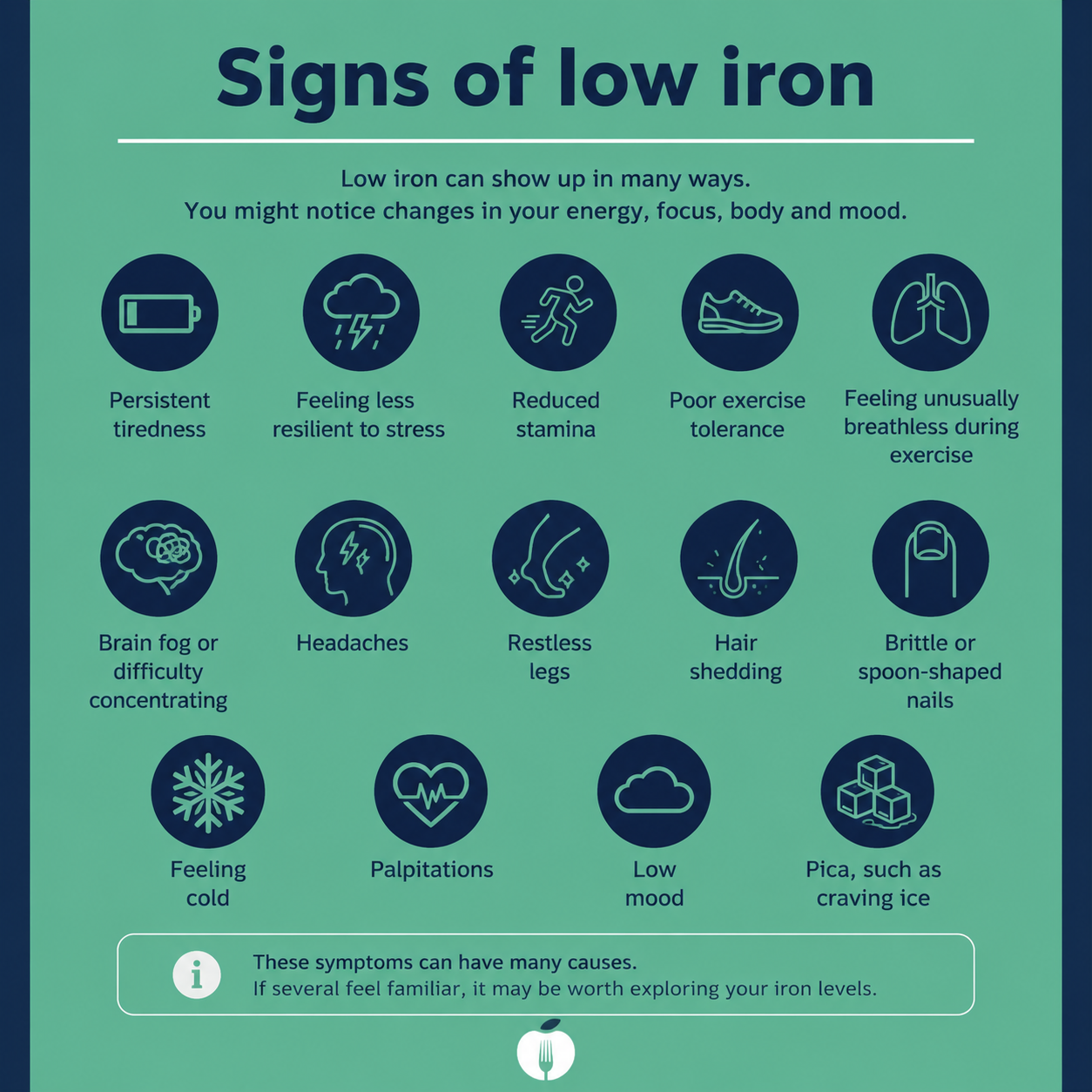
Some people have very few symptoms, while others feel significantly different from their usual selves. The symptoms are also non-specific, which means they can easily be attributed to poor sleep, stress, overtraining, hormonal changes or simply "being busy".
How common is iron deficiency?
Iron deficiency is particularly relevant for menstruating women.
A recent UK analysis of more than 33,000 private health-check samples found absolute iron deficiency, defined in that study as ferritin below 30 ng/mL, in 31.6% of females, compared with 2.9% of males. Among women aged 18-49, prevalence was above 35%.
This was a health-conscious, private-health-check population rather than a representative sample of the whole UK, so it should not be interpreted as a national prevalence estimate. But it highlights just how common low iron stores can be, particularly in menstruating women.
The same study found anaemia in 9.9% of females overall, with the highest prevalence in women aged 18-50.
Vitamin B12 deficiency: why it is different
Vitamin B12 is required for:
Healthy red blood cell formation
DNA synthesis
Normal neurological function
Energy metabolism
Maintaining the nervous system
A deficiency can therefore cause megaloblastic anaemia, where red blood cells become unusually large and don't function normally. But, just like iron, you do not necessarily need to be anaemic to experience consequences of B12 deficiency. NHS guidance notes that neurological and cognitive symptoms can occur with B12 deficiency even when anaemia is not present.
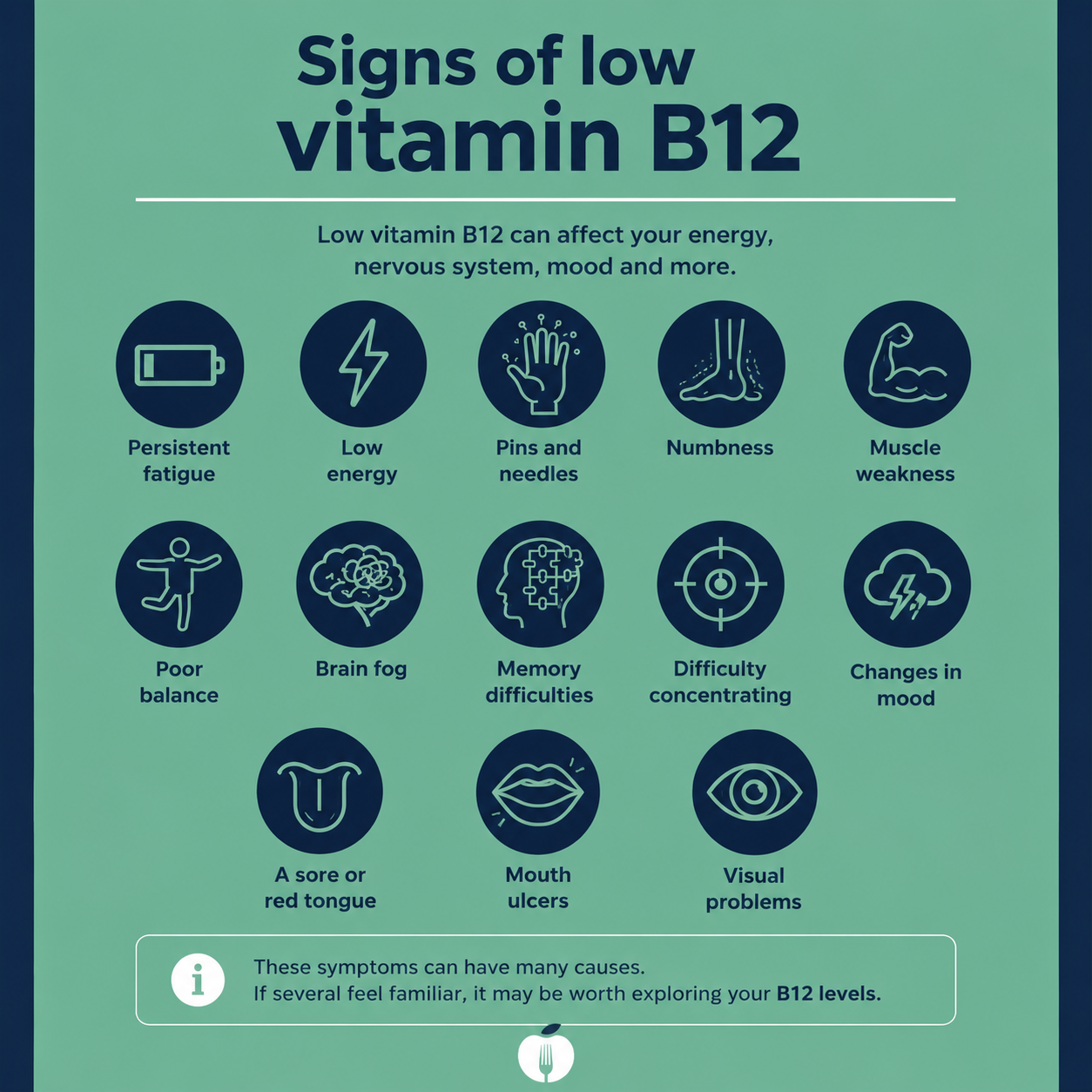
Some neurological complications can become irreversible if a significant deficiency is left untreated for a long time, which is one reason B12 deficiency should not simply be dismissed because haemoglobin is normal.
Who is at risk of B12 deficiency?
Diet is one factor, particularly if you eat little or no animal-source food without using fortified foods or supplements. However, B12 deficiency is not simply a vegan problem. Absorption can be more important than intake.
Risk factors include:
Vegan or highly restrictive diets
Pernicious anaemia - an autoimmune condition that interferes with B12 absorption because of impaired intrinsic factor
Other autoimmune conditions including Coeliac Disease
Gastrointestinal surgery
Conditions affecting the stomach or small intestine
Long-term use of some medications
Metformin
Proton pump inhibitors and some other acid-suppressing medicines
Older age
NICE specifically recognises dietary restriction, gastrointestinal conditions, autoimmune disease and certain medicines as risk factors for B12 deficiency. Interestingly, the body stores substantial amounts of B12. This means deficiency can take years to become apparent after intake or absorption falls.
Vitamin B9 (folate) deficiency and anaemia
Folate, or vitamin B9, is essential for:
DNA synthesis
Cell division
Red blood cell production
Normal development of the nervous system
When folate is severely deficient, red blood cells become abnormally large, producing megaloblastic anaemia, similar to B12 deficiency.
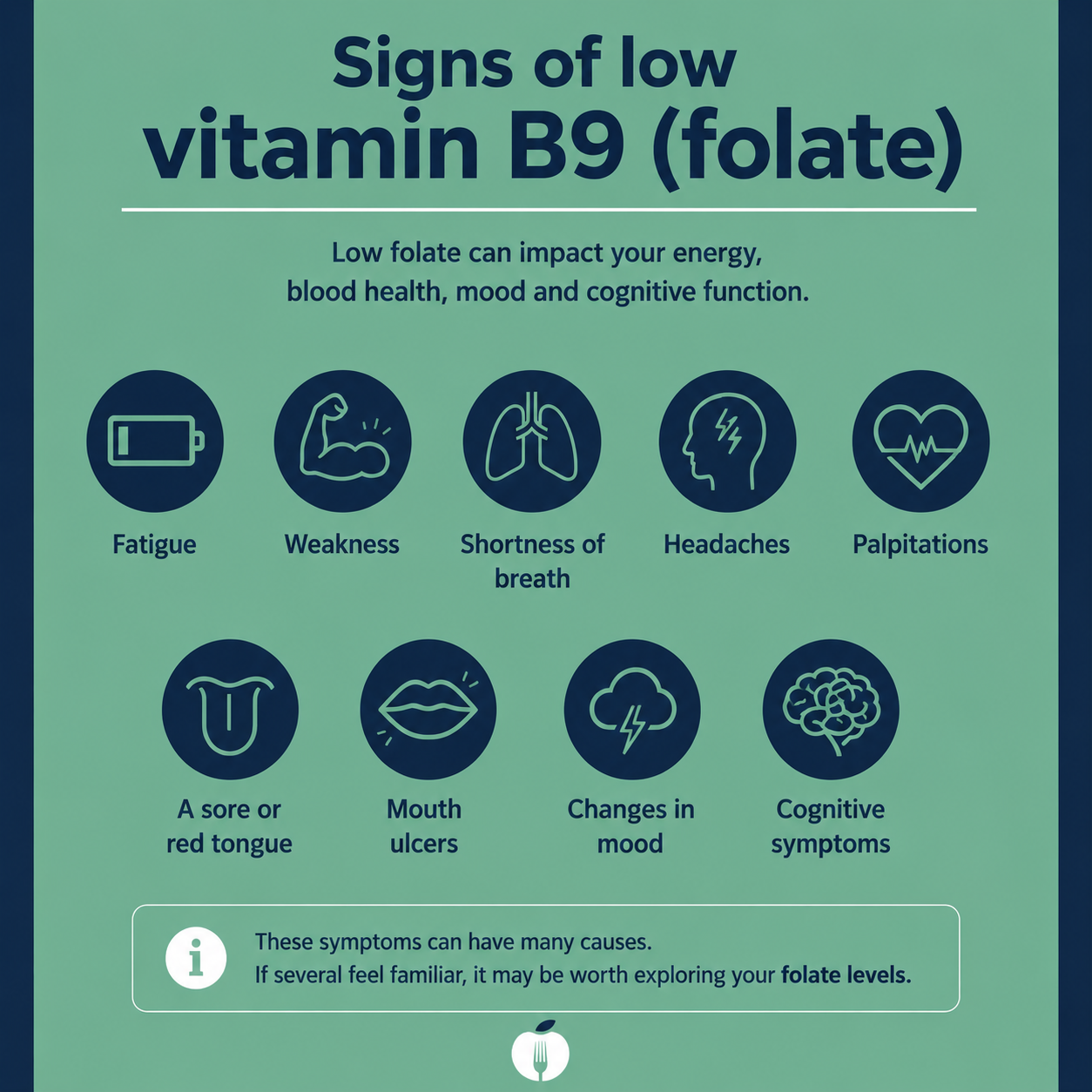
Folate deficiency can develop more quickly than B12 deficiency because the body stores less folate.
Folic acid (synthetic folate supplements) can improve the signs of B12 deficiency without addressing the neurological consequences of B12 deficiency. That's why B12 status matters when folate deficiency/megaloblastic anaemia is suspected. A seemingly improved blood count doesn't always tell the whole story…
How common is low folate in the UK?
Recent UK data suggests that folate status deserves more attention than it sometimes receives. The 2019-2023 National Diet and Nutrition Survey found that 4% of adults aged 19-64 had red blood cell folate below the clinical deficiency threshold, rising to 12% in 11-18-year-olds.
Folate is particularly important before and during early pregnancy. NHS guidance recommends 400 micrograms of folic acid daily from ideally three months before conception through the first 12 weeks of pregnancy.
Why does deficiency happen in the first place?
There are four broad possibilities:
1. Inadequate intake: This can happen through low dietary intake, restrictive eating, poor appetite, low food variety, vegan or vegetarian diets without adequate planning, very low-calorie diets.
2. Increased needs: Requirements can increase during pregnancy, growth spurts like during adolesence, menstruation, endurance training, recovery from blood loss e.g., an operation, giving birth, donating blood.
3. Poor absorption: This is often overlooked. Possible contributors include coeliac disease, Inflammatory bowel disease (IBD), gastrointestinal surgery certain medications, chronic gastrointestinal inflammation or autoimmune conditions affecting absorption.
4. Increased loss: Things like regular blood donation, heavier menstrual cycles, gastrointestinal bleeding, giving birth can all result in higher blood loss, which needs replacing.
For iron, chronic inflammation can also complicate the picture because inflammation can alter iron handling and make stored iron less available to tissues. In short - inflammation can increase hepcidin, a hormone that reduces iron absorption and limits the release of stored iron into circulation.
This is why simply taking more supplements is not always the most useful first step.
Who is most likely to become deficient?
There is no single "deficiency type" of person. Different nutrients have different risk factors, but there are some recurring patterns.
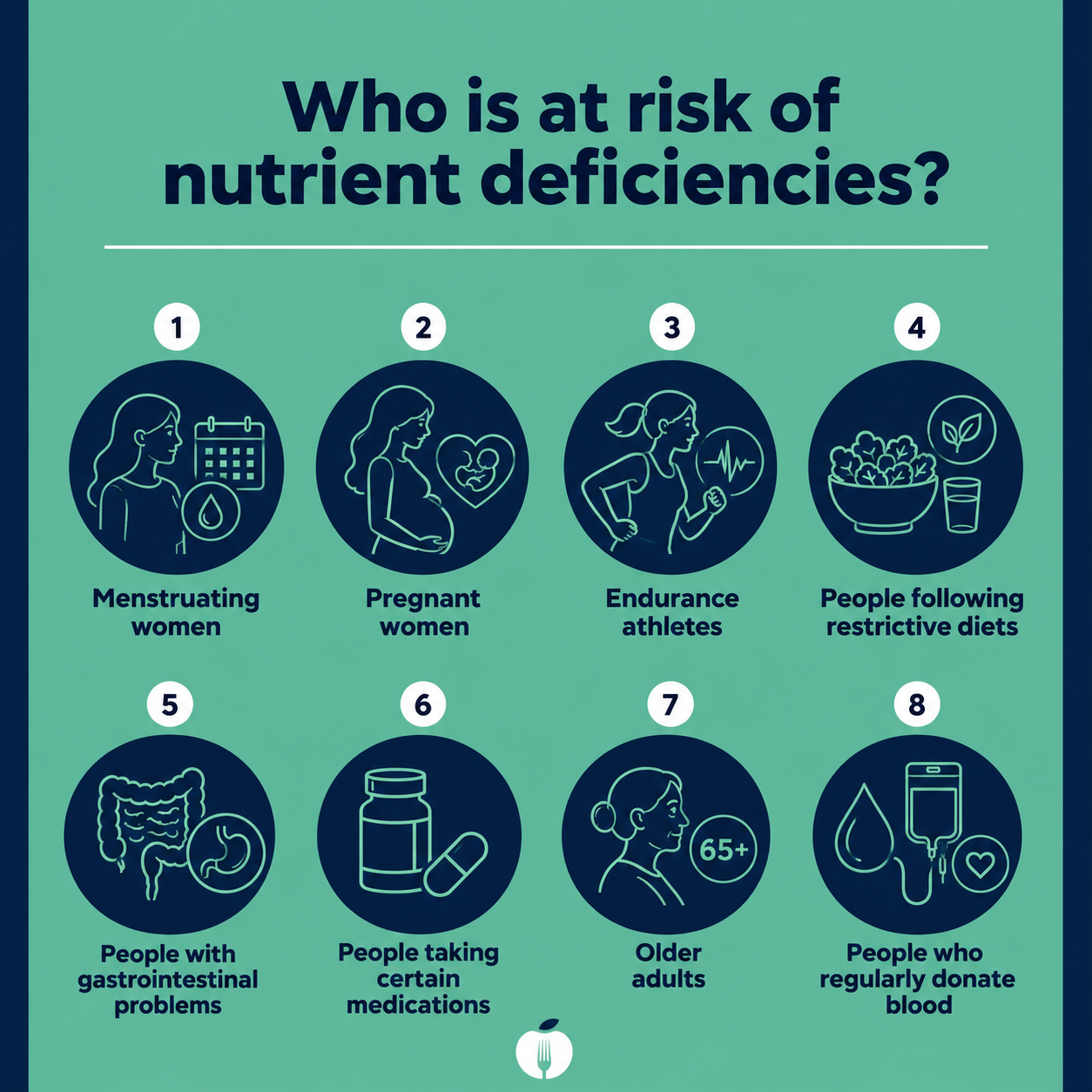
1. Menstruating women. Menstrual blood loss is one of the most important causes of iron depletion. This is particularly relevant if you have heavy periods (changing period products every 1-2hrs), long periods (>7 days), frequent periods (cycles <21 days), clots (larger than 10p coin), bleeding or spotting between periods, or a history of low ferritin or anaemia. If you repeatedly become iron deficient, the question should not simply be "how can I take more iron?". It should also be: Why am I losing more iron than I can replace?.
2. Pregnant women. Pregnancy significantly increases the demand for nutrients involved in red blood cell production. Iron requirements increase, while folate is particularly important for foetal development.
3. Endurance athletes. Iron requirements can be higher in athletes because of increased red blood cell production, exercise-related iron losses and, in some cases, dietary restriction. This is especially relevant if you are training frequently while eating insufficiently. A drop in training performance (e.g., HRV - heart rate variability), recovery or stamina should not automatically be blamed on "overtraining".
4. People following restrictive diets. This can include: vegan diets without B12 supplementation, vegetarian diets, very low-calorie diets, elimination diets, highly restrictive weight-loss diets or diets with very limited food variety. A food-first approach does not mean assuming food alone will always be enough. It means understanding the diet first, identifying what is missing and supplementing strategically when appropriate.
5. People with gastrointestinal problems. Your nutritional status depends on more than what you eat. Absorption can be affected by gastrointestinal conditions including coeliac disease, inflammatory bowel disease and some conditions affecting the stomach or small intestine. Previous gastrointestinal surgery can also alter nutrient absorption.
6. People taking certain medications. Some medicines can influence nutrient absorption or metabolism. For B12, this includes metformin and acid-suppressing medicines such as proton pump inhibitors (e.g., Omeprazole).
7. Older adults. B12 deficiency becomes more common with age, partly because of changes in gastric function and absorption. NICE estimates B12 deficiency affects around 5% of people aged 65-74 and more than 10% of people aged 75 and over.
8. People who regularly donate blood. Every blood donation removes iron-containing red blood cells, meaning repeated donation can gradually deplete iron stores, particularly in menstruating women or people whose dietary intake is marginal.
What blood tests should you ask for?
If you suspect a deficiency, a sensible starting point is a conversation with your GP or healthcare professional. Useful markers may include:
Full blood count (FBC): A group of tests that looks at your red and white blood cells and platelets. It helps identify whether you have anaemia and can give clues about what type of anaemia may be present.
Haemoglobin (Hb): The protein inside red blood cells that carries oxygen around your body. A low haemoglobin level indicates anaemia, but it can remain normal even when iron stores are already becoming depleted.
Mean corpuscular volume (MCV): Measures the average size of your red blood cells. Smaller red blood cells can be seen with iron deficiency, while larger cells can occur with B12 or folate deficiency. It is useful for identifying patterns, but does not tell you the cause on its own.
Ferritin: A marker of your body's stored iron, making it one of the most useful tests for assessing iron stores. However, ferritin also rises during inflammation, infection or illness, so a "normal" result does not always rule out low iron stores and should be interpreted alongside the wider picture.
Transferrin saturation (TSAT): Shows how much of the iron-carrying protein transferrin is actually carrying iron. It gives an indication of how much iron is available for your tissues to use, rather than simply how much is stored.
Serum iron: Measures the amount of iron circulating in your blood at the time of the test. Because levels can fluctuate depending on factors such as food intake and time of day, it is generally more useful when interpreted alongside ferritin, transferrin saturation and other iron markers.
Total iron-binding capacity (TIBC) / transferrin: Measures the blood's capacity to transport iron. Transferrin is the main protein that carries iron around the body, and these markers can help distinguish iron deficiency from other causes of anaemia.
CRP (C-reactive protein): A marker of inflammation in the body. This is particularly useful when interpreting ferritin because inflammation can push ferritin upwards, potentially masking depleted iron stores.
Total B12 & active B12: Total B12 measures the amount of vitamin B12 circulating in your blood, while active B12 measures the portion available for your cells to use. NICE recommends interpreting B12 results alongside symptoms, risk factors and clinical context rather than relying on a single number.
Serum folate (vitamin B9): Measures the amount of folate in your blood and can help identify folate deficiency. B12 and folate deficiency can cause similar changes in red blood cells, so they are often assessed together.
Homocysteine: An amino acid in the blood that needs B12 and folate to be properly processed. Levels can rise when B12 or folate availability is inadequate, although homocysteine is not specific to either deficiency and can be affected by other factors.
Finding low iron, B12 or folate is only half the investigation. The next question is: Why?
For example, repeatedly low ferritin in a menstruating woman may point towards ongoing menstrual blood loss. Low B12 in someone eating plenty of animal products may raise a different question about absorption. Low iron combined with gastrointestinal symptoms might warrant investigation for malabsorption or gastrointestinal blood loss.
This is where personalised nutrition and clinical investigation can complement one another.
I’m deficient. What now?
If your blood tests show that you are low in iron, vitamin B12 or folate, the next step isn't necessarily as simple as taking a supplement.
How a deficiency is managed depends on how low your levels are, whether you have developed anaemia, the symptoms you are experiencing and, importantly, why the deficiency has developed in the first place.
For example, someone with mildly depleted iron stores due to a low dietary intake may need a very different approach from someone with significant iron deficiency anaemia caused by heavy menstrual bleeding. Similarly, low B12 due to an inadequately planned vegan diet is different from B12 deficiency caused by pernicious anaemia or another problem with absorption.
Your healthcare professional may therefore consider:
How severe the deficiency is: More significant deficiencies may require supplementation or medical treatment rather than dietary changes alone.
Whether anaemia has developed: Haemoglobin and other red blood cell markers can help establish whether the deficiency has progressed to anaemia.
Your symptoms: Symptoms such as severe fatigue, breathlessness, palpitations or neurological symptoms can influence how urgently further investigation or management is needed.
Your dietary intake: If you aren't regularly consuming enough iron, B12 or folate, dietary changes can form an important part of preventing the deficiency from recurring.
Whether you are absorbing the nutrient properly: Conditions such as coeliac disease, inflammatory bowel disease, pernicious anaemia or previous gastrointestinal surgery can affect absorption, meaning simply eating more of the nutrient may not solve the problem.
Whether you are continuing to lose or require more of the nutrient: Heavy periods, gastrointestinal bleeding, pregnancy, endurance training and regular blood donation can all increase losses or requirements.
Whether supplementation is appropriate: The type, dose and route of supplementation will depend on the nutrient, severity and underlying cause. For example, some people with B12 deficiency may require injections rather than relying on food or standard oral supplementation.
Whether repeat testing is needed: Follow-up blood tests can help establish whether levels are improving and whether the underlying issue has been adequately addressed.
Ultimately, finding the deficiency is only half of the investigation. If your iron, B12 or folate levels are repeatedly low, the more important question is often why?
Replacing the missing nutrient may help correct the deficiency, but identifying inadequate intake, blood loss, increased requirements or impaired absorption is important for understanding why it happened and reducing the likelihood of it happening again.
How to prevent deficiencies through diet
The foundation is a varied diet containing regular sources of iron. UK reference nutrient intakes for iron are:
8.7mg per day for adult men and non-menstruating women
14.8mg per day for menstruating women (typically aged 19-50)
There are two forms of dietary iron: Haem and non-haem iron.
Haem iron: Found primarily in animal-based foods. Haem iron is generally better absorbed than non-haem.
Beef: 100g cooked lean beef provides approximately 2-3mg iron
Lamb: 100g cooked lamb provides approximately 2mg iron
Pork: 100g cooked pork provides approximately 1mg iron
Chicken: 100g cooked chicken provides approximately 0.7-1.3mg iron, with darker meat generally containing more than breast
Sardines: 1 small tin (around 90-100g drained) provides approximately 2-3mg iron
Mussels: 100g cooked mussels provides approximately 3-7mg iron, making shellfish one of the richer sources
Liver: 100g cooked liver can provide approximately 5-10mg+ iron, depending on the type. However, liver is very high in vitamin A and should be avoided during pregnancy and when trying to conceive
Non-Haem iron: Found in plant-based foods. While absorption is lower than haem-iron, combining foods with vitamin C can improve the absorption of non-haem iron.
Lentils: 150g cooked (around ½-¾ tin) provides approximately 3-5mg iron
Chickpeas: 150g cooked (around ½-¾ tin) provides approximately 3-4mg iron
Kidney beans: 150g cooked provides approximately 3-4mg iron
Tofu: 100g provides approximately 2-5mg iron, although this varies considerably between brands and how the tofu is made
Pumpkin seeds: 30g small handful provides approximately 2-3mg iron
Cashew nuts: 30g small handful provides approximately 1.5-2mg iron
Spinach: 80g cooked portion provides approximately 2-3mg iron. However, spinach also contains compounds that reduce iron absorption, so not all of this iron will be absorbed
Broccoli: 80g cooked portion provides approximately 0.8mg iron, with the added benefit of providing vitamin C
Fortified breakfast cereal: A typical 30-40g serving can provide approximately 2-5mg+ iron, but this varies significantly by brand, so check the nutrition label
Fortified bread: 2 slices (around 70-80g) typically provide approximately 1-2mg iron, depending on the bread
Pair with vitamin C rich foods like: tomatoes, peppers, lemon juice, lime juice. For example:
Lentil dhal + tomatoes + peppers
Beans + avocado + salsa
Tofu stir-fry + broccoli + red pepper
Porridge + berries + pumpkin seeds
Certain compounds can reduce absorption of non-haem iron particularly from plant-based meals. This includes:
Tea and coffee: Polyphenols in tea and coffee can bind to non-haem iron and reduce its absorption. You do not need to avoid them completely, but if you are trying to improve your iron status, have tea and coffee between meals rather than with your most iron-rich meals. Leaving around 1-2 hours either side is a practical approach.
Calcium: High amounts of calcium consumed at the same time as an iron-rich meal or iron supplement can temporarily reduce iron absorption. However, longer-term studies suggest calcium has relatively little effect on overall iron status when eaten as part of a varied diet. There is therefore no need to routinely avoid dairy or other calcium-rich foods at meals. If you are taking a therapeutic iron supplement, your healthcare professional may recommend separating it from calcium supplements or particularly calcium-rich foods.
Soy: Soy foods contain phytates, naturally occurring compounds that can reduce the absorption of non-haem iron. However, soy foods such as tofu, tempeh and edamame can also contribute iron themselves, so there is generally no reason to avoid soy. Fermentation, soaking and food processing can reduce phytate levels, while pairing soy foods with a source of vitamin C can help increase non-haem iron absorption.
A note on iron supplements. Iron is one supplement you shouldn't take "just in case". Unless advised otherwise by a healthcare professional, it is best to confirm iron deficiency through appropriate blood testing before supplementing.
Unlike some nutrients, the body has limited ways of getting rid of excess iron, so taking more than you need can lead to iron accumulation and potentially be harmful or toxic. Iron supplements can also cause side effects including constipation, nausea, abdominal discomfort and diarrhoea. If your iron is low, it is equally important to understand why. Heavy menstrual bleeding, inadequate dietary intake, regular blood donation, pregnancy, gastrointestinal blood loss or problems with absorption can all contribute. Simply taking iron without investigating the underlying cause may mean an important piece of the puzzle is missed.
If deficiency is confirmed, the dose, type and duration of iron supplementation should be tailored to your blood results and individual circumstances, with follow-up testing where appropriate.
How to get enough B12 through diet
Vitamin B12 is naturally found primarily in animal-source foods. Good sources include:
Meat
Fish
Eggs
Milk
Yoghurt
Cheese
Some fortified foods also contain B12.
If you follow a vegan diet, reliable B12 supplementation and/or regular intake of fortified foods is particularly important.
And remember: if B12 is low despite a good dietary intake, investigate absorption rather than simply eating more B12-containing foods.
How to get enough folate through diet
Folate-rich foods include:
Spinach
Kale
Broccoli
Brussels sprouts
Peas
Beans
Lentils
Avocado
Citrus fruits
Nuts and seeds
Fortified foods
One of the easiest ways to improve folate intake is simply to increase the variety and quantity of green vegetables and legumes in your diet.
For pregnancy, however, food is not considered a substitute for folic acid supplementation. NHS guidance recommends supplementing with 400 mcg daily when trying to conceive and during the first 12 weeks of pregnancy.
When to speak to your GP
It is worth speaking to your GP if you have persistent or unexplained:
Fatigue
Breathlessness
Palpitations
Dizziness
Headaches
Reduced exercise tolerance
Restless legs
Hair loss
Pins and needles
Numbness
Cognitive changes
Heavy menstrual bleeding
You should also discuss testing if you have a history of anaemia or deficiency, are pregnant or trying to conceive, follow a restrictive diet, have gastrointestinal symptoms or have risk factors for impaired absorption.
If anaemia is confirmed, it is particularly important to investigate why it has occurred rather than simply replacing the missing nutrient indefinitely.
FAQs
-
Yes. Iron stores can become depleted before haemoglobin falls into the anaemic range. This is known as iron deficiency without anaemia and can be associated with fatigue, reduced exercise tolerance, poor concentration, restless legs and reduced stamina. Ferritin and other iron studies can provide information that a full blood count alone cannot.
-
There is no single ferritin number that should be interpreted in isolation for every person. A ferritin below 30 µg/L or ng/mL is commonly used as evidence of depleted iron stores in many clinical contexts, but inflammation can increase ferritin and make interpretation more difficult. Transferrin saturation, CRP, symptoms and the wider clinical picture may therefore be important.
-
Yes. Iron deficiency is only one cause of anaemia. Vitamin B12 and folate deficiency can cause megaloblastic anaemia, while other causes include chronic disease, blood loss, inherited conditions and other nutritional deficiencies. This is why anaemia should prompt investigation rather than automatically assuming low iron is responsible.
-
Yes. B12 deficiency can cause neurological and cognitive symptoms even when haemoglobin and other blood-count markers are not yet abnormal. Symptoms can include pins and needles, numbness, balance problems, cognitive difficulties and fatigue. NICE recommends assessing B12 deficiency based on symptoms, risk factors and appropriate blood testing rather than assuming a normal blood count excludes deficiency.
-
It may. Iron has roles beyond haemoglobin production, including mitochondrial energy metabolism and other cellular processes. Studies of non-anaemic iron deficiency have reported associations with fatigue, concentration difficulties and reduced exercise tolerance, although these symptoms are non-specific and can have many causes.
-
Potentially. Iron is involved in oxygen transport and energy metabolism, so iron deficiency can contribute to reduced stamina and exercise tolerance. This can occur before overt anaemia develops. If your usual training suddenly feels harder, particularly alongside fatigue, breathlessness or restless legs, iron status may be worth investigating alongside other possible explanations such as under-fuelling, sleep disruption or excessive training load.
-
Iron deficiency has been associated with restless legs syndrome, which can interfere with sleep. However, poor sleep by itself does not indicate iron deficiency. Sleep quality is influenced by many factors, so iron status is most useful to investigate when sleep problems occur alongside other symptoms or risk factors.
-
There is some evidence linking iron deficiency anaemia with altered autonomic nervous system activity and lower heart rate variability. However, the evidence is limited and HRV is influenced by many other factors including sleep, stress, illness, alcohol and training load. A low HRV reading should therefore never be used on its own to diagnose iron deficiency.
-
Not necessarily. Fatigue has many possible causes, and unnecessary iron supplementation can cause gastrointestinal side effects and, in excess, can be harmful. If iron deficiency is suspected, it is better to assess your symptoms and appropriate blood markers and identify why your iron may be low before starting high-dose supplementation.
Conclusion
Anaemia is useful information, but it is not the whole story. Your body does not suddenly become nutrient deficient on the day your haemoglobin crosses a laboratory threshold.
There is often a period beforehand when nutrient stores are falling, physiological processes are adapting and symptoms may gradually appear. This is particularly relevant to iron, but it also applies to B12 and folate. And this is why I believe nutrition should go beyond asking: "Is this blood test normal?"
Instead, we can ask: "Does this result make sense alongside your symptoms, diet, menstrual history, exercise, gut health, medications and wider health picture?" That is where personalised nutrition becomes valuable.
If you are tired all the time, struggling with exercise recovery, experiencing brain fog or repeatedly developing low iron or B12, there may be a reason why.
Sometimes the answer really is that you are not eating enough of a particular nutrient.
Sometimes it is blood loss.
Sometimes it is increased demand.
Sometimes it is an absorption issue.
And sometimes there is another underlying driver entirely.
The aim is not to chase every number on a blood test. It is to join the dots between your symptoms, your biology and your lifestyle, then build a practical plan around what your body actually needs.
If you are experiencing persistent symptoms or recurrent nutrient deficiencies and want help making sense of the bigger picture, you can work with me to explore your diet, symptoms, lifestyle and relevant testing and build a personalised nutrition strategy around your goals.
About the author
Laura Andreli, Nutritional Therapist
Laura helps clients unlock the powerful connection between the gut and the brain. She specialises in IBS, SIBO, digestive disorders, food sensitivities, and the gut–brain axis - particularly where symptoms such as brain fog, anxiety, low mood, fatigue, and poor concentration may be linked to underlying microbiome imbalance and metabolic stress.
Laura uses evidence-informed nutrition strategies and targeted lifestyle interventions to support digestive function, calm neuroinflammation, and improve energy, mood, and cognitive performance.
Laura’s path into nutritional therapy is personal. While studying at Cambridge, she was diagnosed with Polyendocrine Metabolic Ovarian Syndrome (PMOS; formerly termed PCOS). The experience of receiving a label without clear, actionable guidance shaped her philosophy: translate complex science into practical steps that genuinely help people feel and function better. A former England-level long jumper, she understands first-hand how hormones, metabolism, and nutrition can influence performance, recovery, and cognition.
-
British Dietetic Association (n.d.) Iron-rich foods and iron deficiency. Available at: (Accessed: 27 August 2026).
British Society of Gastroenterology (2021) ‘British Society of Gastroenterology guidelines for the management of iron deficiency anaemia in adults’, Gut, 70(11), pp. 2030-2051. Available at: (Accessed: 27 August 2026).
National Institute for Health and Care Excellence (2024) Vitamin B12 deficiency in over 16s: diagnosis and management (NG239). Available at: (Accessed: 27 August 2026).
NHS (n.d.) Iron deficiency anaemia. Available at: (Accessed: 27 August 2026).
NHS (n.d.) Vitamin B12 or folate deficiency anaemia. Available at: (Accessed: 27 August 2026).
National Institutes of Health, Office of Dietary Supplements (n.d.) Iron - Health Professional Fact Sheet. Available at: (Accessed: 27 August 2026).
National Institutes of Health, Office of Dietary Supplements (n.d.) Vitamin B12 - Health Professional Fact Sheet. Available at: (Accessed: 27 August 2026).
National Institutes of Health, Office of Dietary Supplements (n.d.) Folate - Health Professional Fact Sheet. Available at: (Accessed: 27 August 2026).
World Health Organization (2020) WHO guideline on use of ferritin concentrations to assess iron status in individuals and populations. Geneva: World Health Organization. Available at: (Accessed: 27 August 2026).